
Pulse
AI Elasticsearch monitoring platform
Catch cluster issues and cut Elasticsearch costs before they bite
Reviewed by The Desk · Last verified July 2026
“A credibly-built, tightly-focused monitoring and cost-optimization layer for Elasticsearch and OpenSearch that pairs an AI platform with real human experts. Worth serious consideration if you run these engines at scale, and irrelevant if you don't.”
Skip it ifSkip it if you don't run Elasticsearch, OpenSearch, or ClickHouse — Pulse is purpose-built for these engines and offers nothing for a general Postgres/MySQL stack (Postgres is still "coming soon"), and its most valuable proactive maintenance and 24/7 expert support are gated behind contact-sales tiers.
What it is
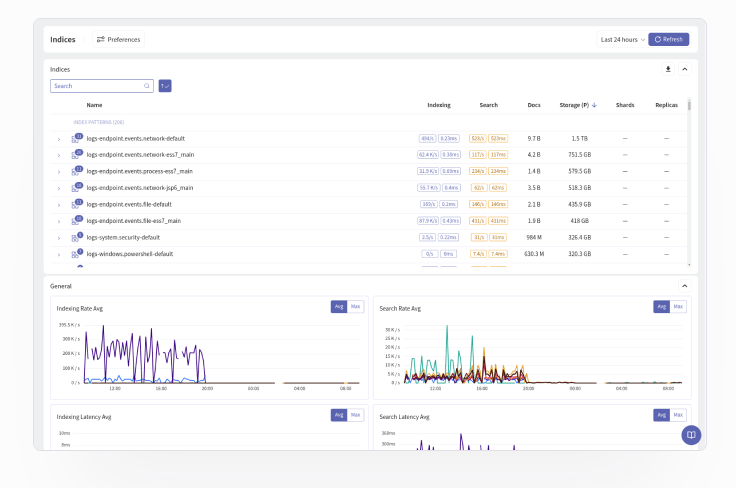
Pulse is an AI-native monitoring and optimization platform for Elasticsearch and OpenSearch clusters, with support extended to ClickHouse and PostgreSQL on the roadmap. It connects to clusters without an agent, continuously assesses health, and flags problems like shard imbalance, JVM heap pressure, slow queries, recovery issues, and security misconfigurations — often before they surface as user-facing failures. When something breaks, its automated root-cause analysis traces the issue back through metrics, logs, and configuration and tells you how to fix it.
What separates Pulse from generic observability tooling is who builds it and how it packages help. It comes from the team behind BigData Boutique, a decade-old Elasticsearch/OpenSearch consultancy led by OpenSearch Ambassador Itamar Syn-Hershko, and it deliberately blends software with human expertise: higher tiers fold in unlimited consulting and 24/7 SLA-backed support. The cost angle is a real selling point — cluster cost analytics surface over-provisioned nodes and redundant replicas, with claimed 30-50% cloud-bill reductions. It plugs into Grafana, Datadog, Prometheus, and Kibana, alerts through Slack, PagerDuty, and email, and exposes an MCP server for Cursor and Claude Code.
The tradeoff is focus. A generous free tier covers one small cluster, Essentials ($29) and Agentic ($99) are billed per cluster annually, but the features most teams would actually pay for — proactive maintenance and round-the-clock expert support — live in contact-sales Premium and Enterprise tiers. It is also strictly for these specific engines, making it a credible specialist alternative to Elastic's Platinum/Enterprise support rather than a general-purpose database monitor.
Key features
- Automated AI root-cause analysis across metrics, logs, and configuration
- Continuous health assessments detecting shard imbalance, JVM heap pressure, and recovery problems
- Query analytics that flag slow, expensive, and redundant queries
- Cluster cost analytics with over-provisioning and replica recommendations
- Context-aware alerting to Slack, email, and PagerDuty
- MCP server for use with Cursor, Claude Code, and Codex
- Agentless connection to self-managed and cloud-hosted clusters
- 24/7 expert support with SLA on higher tiers
Who it’s for
Monitor Elasticsearch and OpenSearch cluster health in real time
Run automated root-cause analysis during incidents
Cut Elastic Cloud and OpenSearch bills by finding over-provisioned nodes and redundant replicas
Surface and optimize slow or expensive queries
Pros & cons
The good
- Built and operated by veteran Elasticsearch/OpenSearch experts (the BigData Boutique team, led by OpenSearch Ambassador Itamar Syn-Hershko), which lends real weight to its recommendations
- Agentless setup with a genuinely usable free tier and transparent per-cluster pricing on the lower plans
- Cost analytics that routinely surface over-provisioned nodes, missing ILM phases, and redundant cold-data replicas, with reported 30-50% cloud-bill reductions
The catch
- Narrow by design: only Elasticsearch, OpenSearch, and ClickHouse are supported today
- The highest-value proactive maintenance and 24/7 SLA-backed expert support sit behind contact-sales Premium and Enterprise tiers
Pricing
| Tier | Price | What you get |
|---|---|---|
| Free | Free | 1 cluster, 1 user, 3 nodes, 100 shards · 1-day data retention · Core monitoring, dashboards, and power tools |
| Essentials | $29/mo | Per connected cluster, billed annually · Up to 3 users, 10 nodes, 500 shards · 7-day retention · Quarterly health reports · 1 alerting destination |
| Agentic | $99/mo | Per connected cluster, billed annually · Up to 10 users, 50 nodes, 1,000 shards · 14-day retention · Automated root-cause analysis · MCP server (10 calls/month) and query analytics |
| Premium | Custom | Contact for quote · Unlimited users/nodes/shards, 90-day retention · Unlimited alerting and role-based access control · Quarterly proactive maintenance and expert support |
| Enterprise | Custom | Contact for quote · 24/7 support with custom SLA · Proactive monitoring by experts · Shared Slack channel, on-premise deployment, professional services |
Free tier — 1 cluster, 1 user, 3 nodes, 100 shards, 1-day data retention
Alternatives to Pulse
More Business Ops →



Questions people ask
Which databases does Pulse support?
Elasticsearch, OpenSearch, and ClickHouse are supported today, with PostgreSQL listed as coming soon. It works across self-managed clusters and cloud-hosted deployments including Elastic Cloud, AWS, ClickHouse Cloud, and Aiven.
Does Pulse require installing an agent on my cluster?
No. Pulse connects to your cluster without deploying agents on the database itself, which keeps setup lightweight and avoids adding load to production nodes.
How is Pulse priced?
Pricing is per connected cluster, billed annually. There is an always-free tier for a single cluster, Essentials at $29/cluster/month, and Agentic at $99/cluster/month. Premium and Enterprise tiers, which add proactive maintenance and 24/7 expert support, are contact-sales.
Can Pulse actually reduce my Elasticsearch costs?
Its cost analytics surface over-provisioned nodes, missing ILM phases, and redundant replicas on cold data. The company reports typical Elastic Cloud savings of 30-50%, though actual results depend on how your clusters are configured.
Who is behind Pulse?
It was built by the engineering team at BigData Boutique, a long-running Elasticsearch and OpenSearch consultancy, and is led by founder and OpenSearch Ambassador Itamar Syn-Hershko. The product is SOC 2 Type II certified.