
ActionKit
AI agent integration platform
One API that gives AI agents 1,000+ real integration actions
Reviewed by The Desk · Last verified July 2026
“A well-engineered tool-calling layer that lets agent builders skip the grind of writing and maintaining OAuth and API wrappers for every service. Its edge is Paragon's mature managed-auth platform underneath, though quote-only pricing makes cost hard to judge before you commit.”
Skip it ifSkip it if you only need one or two integrations, aren't building agent products, or need transparent self-serve pricing — Pro and Enterprise are quote-only and scale with connected users, so real costs stay behind a sales call.
What it is
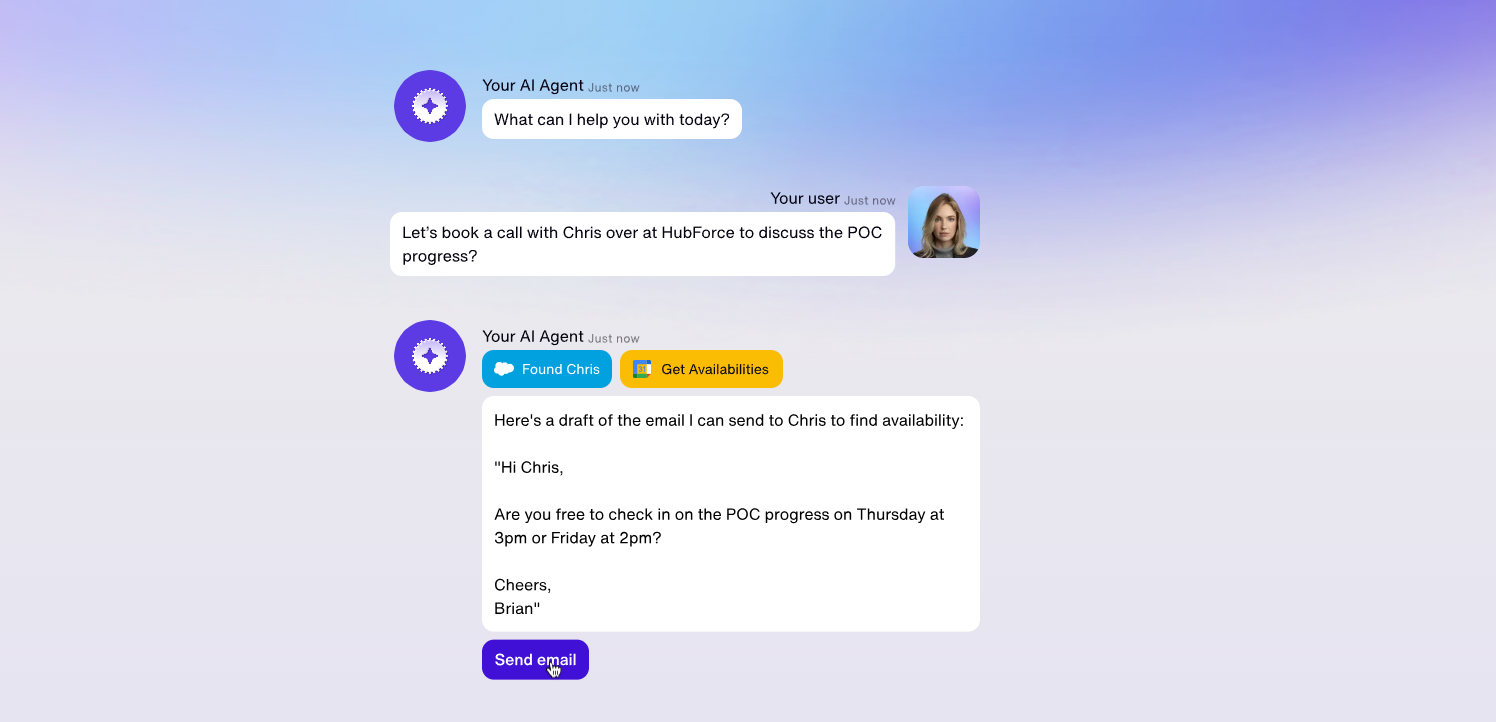
ActionKit is Paragon's tool-calling layer for AI agents. Instead of hand-building and maintaining OAuth flows and API wrappers for every service an agent needs to touch, developers expose more than 1,000 prewritten actions across 130+ connectors — Salesforce, HubSpot, Jira, Slack, Gmail and the rest — through a single API or an MCP endpoint. Each action ships with structured, LLM-oriented descriptions and parameter schemas so the model can pick the right tool and fill in arguments without heavy prompt engineering.
The product sits on top of Paragon's mature embedded-integration platform, which has handled managed authentication and end-user connection portals since 2020. That lineage is ActionKit's biggest differentiator: user auth, token refresh, and per-customer credentials are handled for you, and it drops into OpenAI's SDK, LangChain, or the Vercel AI SDK in a few lines. A 2026 addition, ActionKit Triggers, extends it from request/response tool calls to event-driven agents that react to changes in third-party apps.
The main friction is commercial rather than technical. There's a free tier to start building, but Pro and Enterprise pricing is quote-only and scales with connected users, so you can't model costs without a sales conversation. It's clearly aimed at teams shipping agent products at scale — if you only need a couple of integrations, the managed convenience is harder to justify against wiring the APIs yourself.
Key features
- 1,000+ pre-built integration actions
- 130+ third-party connectors
- Single unified API for agent tool-calling
- Native MCP (Model Context Protocol) support
- LLM-optimized action descriptions and parameter schemas
- Fully managed authentication and token refresh
- Embedded Connect Portal for end-user authorization
- Framework SDKs (OpenAI, LangChain, Vercel AI SDK)
- ActionKit Triggers for event-driven agents
- Event logs and monitoring dashboard
- SOC 2 Type II, SSO, RBAC, and self-hosting (Enterprise)
Who it’s for
Give AI agents authenticated access to CRM, ticketing, email, and Slack actions
Add reliable tool-calling to LLM agents without building each integration by hand
Let SaaS products embed customer-authorized third-party actions inside their own agents
Build event-driven agents that react to changes in third-party apps via Triggers
Pros & cons
The good
- 1,000+ prewritten actions across 130+ connectors with LLM-tuned descriptions and fully managed OAuth, so you skip building and maintaining each integration
- Drops into OpenAI's SDK, LangChain, or the Vercel AI SDK — or an MCP endpoint — in a few lines of code
- Backed by Paragon's mature embedded-integration platform: SOC 2 Type II, SSO, RBAC, self-hosting, and event-driven Triggers
The catch
- No public pricing; Pro and Enterprise require a sales quote, so cost is hard to evaluate up front
- Usage-based pricing on connected users can climb as your agent product scales
- Overkill if you only need a couple of integrations or aren't shipping agentic products
Pricing
| Tier | Price | What you get |
|---|---|---|
| Free | Free | Start building · Access to Managed Sync, ActionKit, and Workflows · Managed authentication · Event logs |
| Pro | Custom | Unlimited integrations · Embedded UX or headless SDK · Priced by connected users (quote) |
| Enterprise | Custom | Self-hosting / forward-deploy · SAML SSO · Dynamic field mapping · Priority support with SLAs · Professional services |
Free tier — Free tier/trial to start building; paid usage scales by connected users
Alternatives to ActionKit
More Agents & Automation → mcpt3.5Curated MCP server registry from Mintlify — now discontinued
 Langflow4.4Drag-and-drop your way to production AI agents and RAG apps
 Portkey Prompt Studio4.3Build, test and ship prompts across 1,600+ models in production
 BrowserAgent3.9Automate the browser with no-code AI agents and no per-run API bills
Questions people ask
What is ActionKit by Paragon?
It's a tool-calling layer that gives AI agents access to more than 1,000 prewritten actions across 130+ third-party apps through a single API or an MCP endpoint, with authentication handled for you.
Does ActionKit support MCP?
Yes. In addition to a REST-style API and framework SDKs, ActionKit exposes its actions through the Model Context Protocol so MCP-compatible agents can call them directly.
How much does ActionKit cost?
There's a free tier to start building, but Pro and Enterprise pricing is quote-only and scales with the number of connected users, so you'll need to contact Paragon's sales team for exact figures.
Who is ActionKit best for?
Engineering teams and SaaS companies shipping agentic AI products that need reliable, authenticated tool-calling across many integrations without building and maintaining each one themselves.
Who makes ActionKit?
Paragon, a Y Combinator-backed (W20) integration-infrastructure company founded in 2019 by Brandon Foo and Ishmael Samuel, which has offered embedded integrations since 2020.